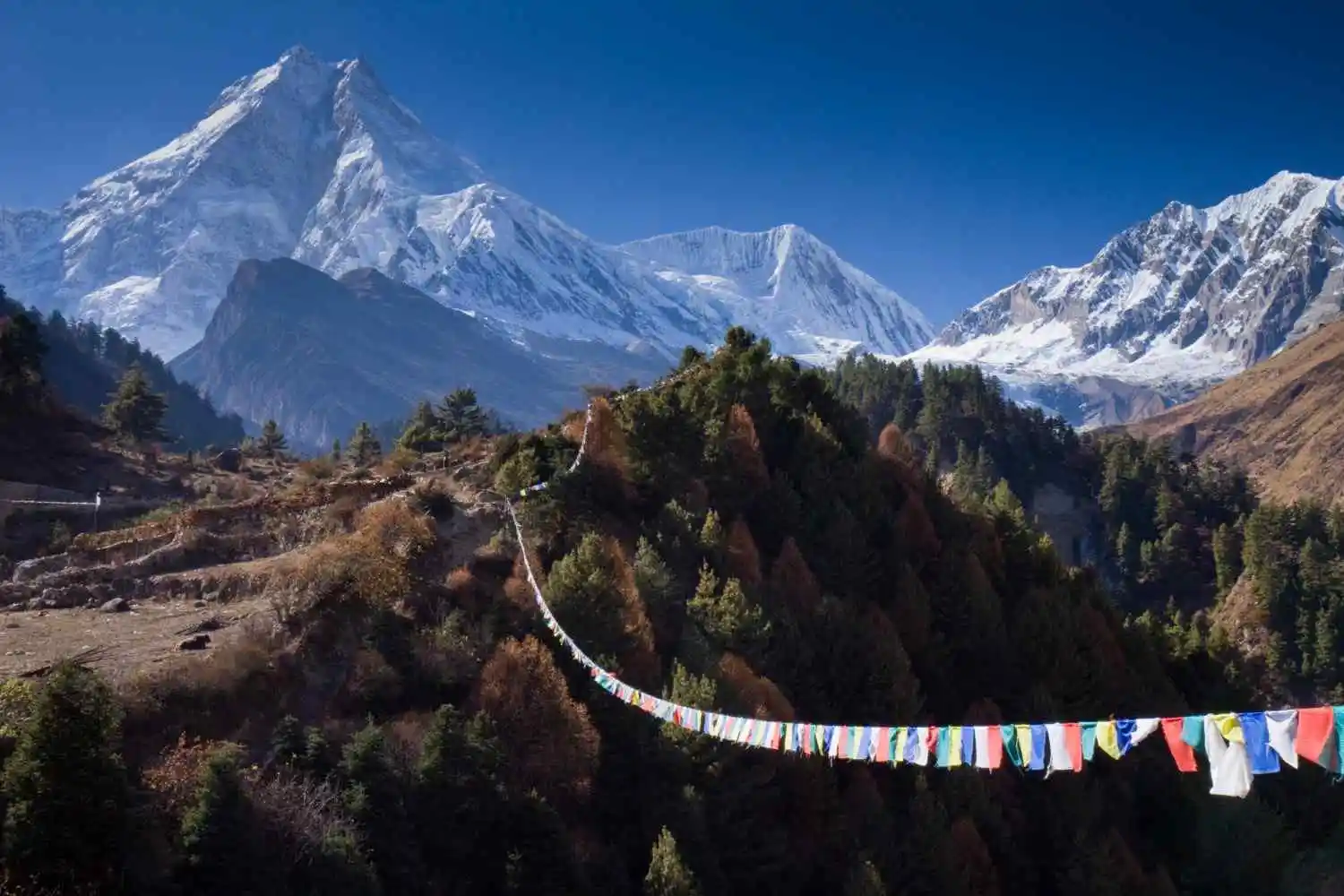
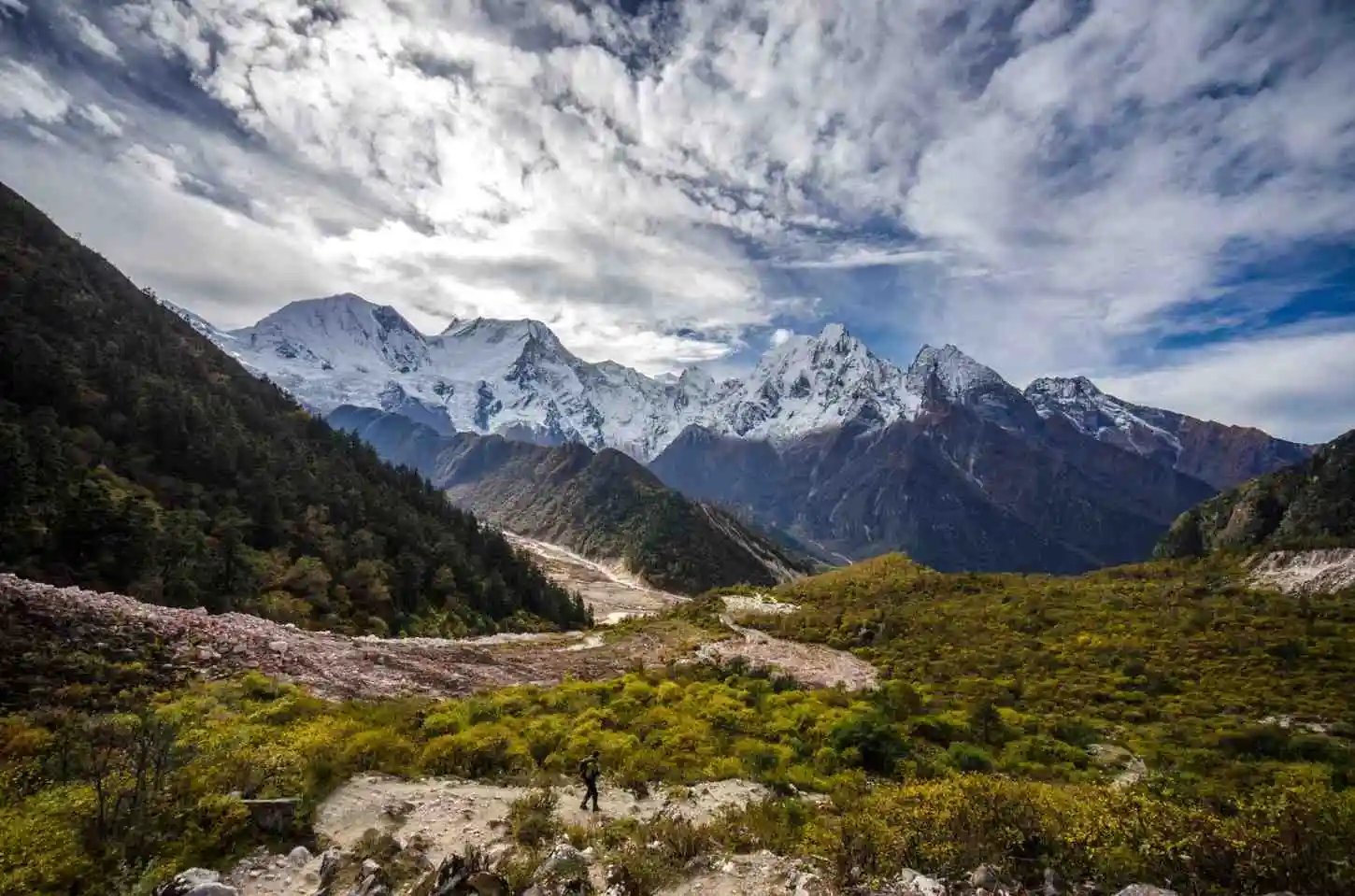
One of the most beautiful things about the Manaslu Circuit is how gently it introduces itself to you. The journey begins at a comfortable altitude, where the sound of rushing rivers follows you along stone trails and terraced hillsides filled with small villages and fields. Each day, almost without you noticing, the scenery slowly changes. The forests thin out, the valleys widen, and soon you find yourself walking through quiet alpine landscapes where the mountains feel closer and the world feels calmer. The colors shift from deep greens to soft greys and finally to bright snow-covered peaks. It doesn’t happen all at once; it unfolds day by day, and that gradual change is part of the magic. By the time you reach the higher sections, the silence, the crisp air, and the vast Himalayan views make you realize the trek isn’t just about reaching a destination but about experiencing the mountains step by step.
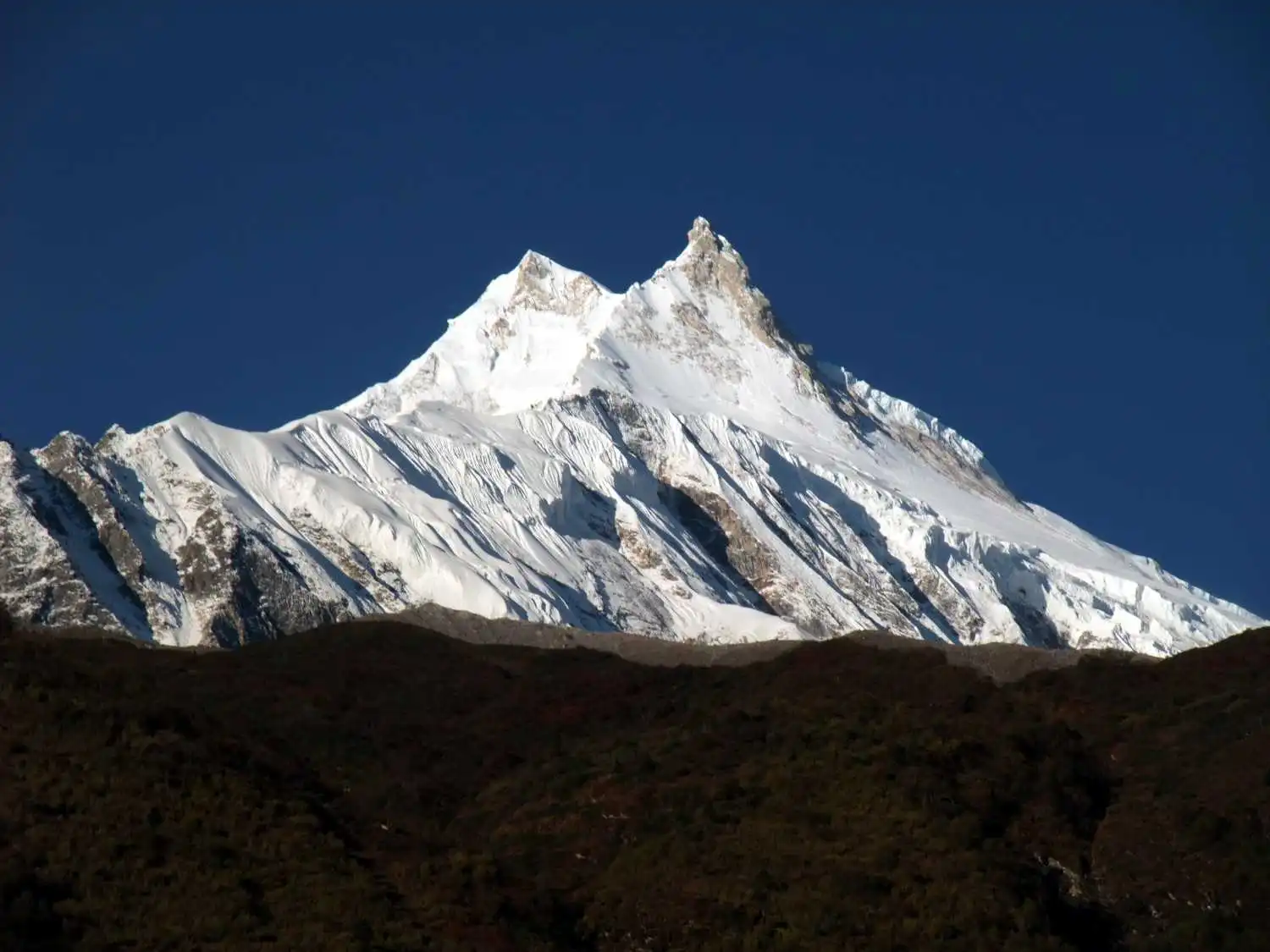
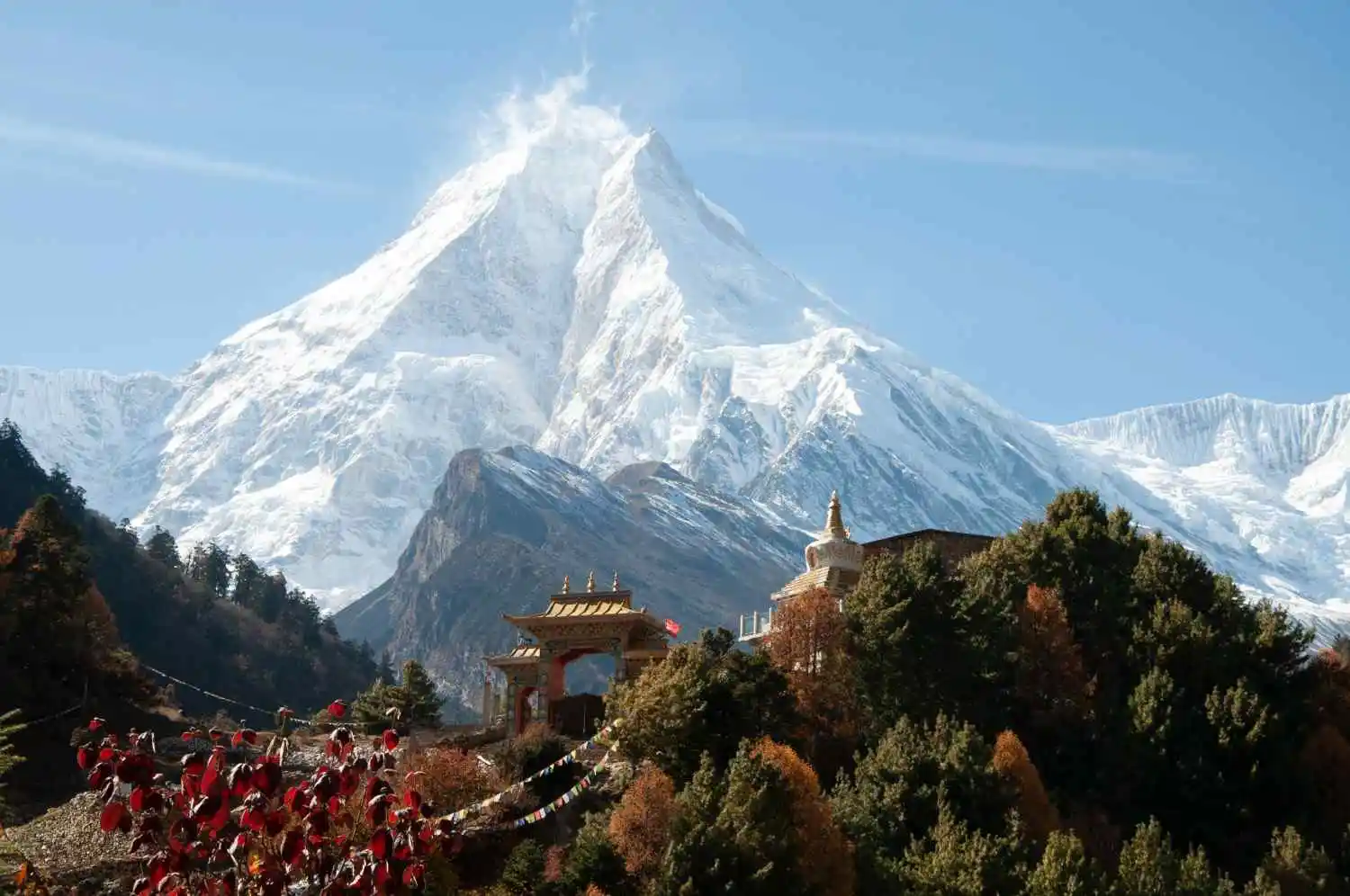
Another highlight is the constant presence of Mount Manaslu. At times it feels remote and towering, and at other moments it appears close and imposing, subtly slowing your pace. The mountain becomes a reference point that defines the entire journey.
Cultural immersion is not a secondary aspect of the trek. The route passes through Tibetan-influenced villages where daily life still revolves around monasteries, prayer flags, and seasonal rhythms. Places like Samagaon and Samdo are lived-in communities rather than tourism-staged stops, and this authenticity is reflected in simple moments such as shared teahouse meals, slow evenings, and familiar faces encountered along the trail.
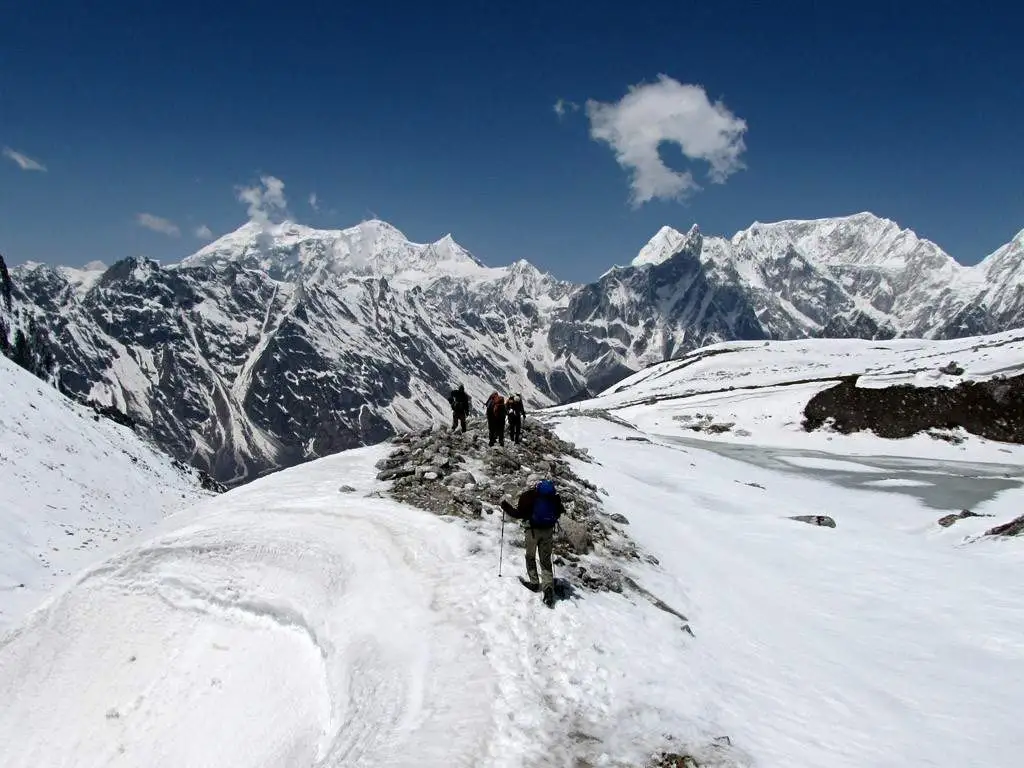
Then there is the crossing of Larkya La Pass, among the best places in Nepal to explore. It is the physical and emotional climax of the trek. Demanding and exhausting, yet deeply rewarding. Standing at 5,106 meters, surrounded by glaciers and jagged peaks, it feels less like a moment of triumph and more like a quiet acknowledgment of how far you have come.
The sense of space is another highlight that often goes unnoticed. As the Manaslu region is a restricted area, the trail sees far fewer trekkers than the Annapurna or Everest regions. This means narrower paths, quieter teahouses, and the freedom to settle into your own rhythm. You become aware of your breathing, your thoughts, and the simple sound of boots on stone.
Lastly, the pace of the trek itself is a highlight. The acclimatization days are unhurried, and the trail encourages patience. It is not about covering distances quickly but about moving steadily, observing, and allowing the journey to unfold naturally. In the end, it does not feel like an adventure you merely completed. It feels as though you truly spent time within the place itself.
 Country
Nepal
Country
Nepal
 Duration
12 Days
Duration
12 Days
 Difficulty
 Max. Altitude
5240 meters /
Max. Altitude
5240 meters / Prime Activity
Trekking
Prime Activity
Trekking
 Season
Autumn
Season
Autumn
International airfare and taxes
Nepal entry visa fee
Your Travel Insurance (compulsory)
All the expenses of a personal nature
Any kind of drinks and desserts during the trek
Tips to guide and porter (Tipping is expected)
Travel insurance is not just recommended for the Manaslu Circuit Trek; it is essential. The trail reaches very remote parts of the Himalaya, and once you leave the roadhead, medical facilities become extremely limited. If a serious illness, injury, or altitude-related problem occurs, evacuation is often the only safe solution. Having proper insurance ensures you can receive timely assistance without worrying about the high cost of rescue operations.
The Manaslu region combines high altitude, long walking days, and unpredictable mountain weather. In some sections, the nearest health post may be several hours or even a full day’s walk away. Insurance helps cover risks such as:
Medical crises: hospitalization, doctor visits, and medications.
Evacuation and rescue: Helicopter or ground evacuation for severe altitude sickness, injury, or illness.
Trip interruption or cancellation: Coverage for non-refundable expenses if the trek cannot be completed.
Lost or damaged luggage and equipment: Protection for essential trekking equipment and personal belongings.
Ensure your insurance covers:
Coverage for trekking above 5,000 meters.
Emergency helicopter evacuation and search-and-rescue.
Hospital treatment and medical expenses in Nepal.
International companies such as World Nomads, Allianz, or IMG Global offer trekking-specific coverage, and several Nepali companies provide local coverage at a low cost.
Keep a copy of the policy in both hard and electronic formats.
Inform your trekking guide of the insurance details to assist in emergencies.
Check exclusions, including pre-existing conditions, extreme weather delays, and solo trekking.
Coverage should start on arrival in Nepal and extend until departure.
Good insurance allows trekkers to focus on the journey, the mountain views, the villages, and the cultural experience, rather than worrying about potential emergencies. Knowing that evacuation and medical care are covered also reassures family members back home and makes the trek safer and less stressful overall.
Before starting the Manaslu Circuit Trek, all foreign travelers must first obtain a Nepal tourist visa to enter the country. For most nationalities, a visa on arrival is available, and the process is simple and quick.
Travelers can obtain a visa at Tribhuvan International Airport in Kathmandu, where most trekkers arrive before beginning their trek. Visa forms can be filled out at the airport kiosks or online in advance to save time. A few nationalities are required to apply through a Nepalese embassy beforehand, so it is advisable to check the latest immigration rules before traveling.
Nepal offers several entry visas that allow tourists to travel in and out of the country within the validity period of the visa. The charges are the same whether the visa is obtained on arrival or at an embassy.
Current visa prices are:
15-day multiple-entry visa: USD 30 or equivalent
30-day multiple-entry visa: USD 50 or equivalent
90-day multiple-entry visa: USD 125 or equivalent
Payments can be made in foreign currency or by card, depending on the facilities available at the entry point. Passport validity is strictly enforced, and passports must be valid for at least six months beyond the date of arrival.
Visa extensions can be obtained at the Department of Immigration offices in Kathmandu or Pokhara. Extensions may be necessary if travelers:
Plan to extend their stay due to a longer trekking itinerary
Fall ill during their trip
Change their travel plans
The extension process is generally straightforward but requires proper documentation and an additional fee based on the duration of the extension.
For the most accurate and up-to-date information, tourists are advised to visit the official Nepal Immigration website or contact the immigration offices directly.
The Manaslu Circuit is not a standard trekking route. It is a restricted area with specific regulations in place to protect the environment and local communities. As a result, all trekkers are required to obtain the necessary permits, and understanding these requirements before starting the trek is essential.
The primary permit required for this trek is the Manaslu Restricted Area Permit.
Purpose: This permit helps regulate tourism, protect the fragile environment, and ensure safety in this remote region.
Validity: Issued based on the number of trekking days. Permits are issued for specific trekking dates and must match your itinerary.
Checkpoint Inspections: Permits are checked at multiple entry and exit points by police and local authorities, so carrying the original permit at all times is mandatory.
The RAP must be arranged through a registered trekking agency, and hiring a licensed guide is mandatory, as independent trekking is not permitted in the Manaslu restricted area.
Trekkers may also require Manaslu Conservation Area Project (MCAP) and Annapurna Conservation Area Project (ACAP) permits, depending on the sections of the trail used.
Purpose: These permits support the conservation of wildlife, forests, and cultural heritage in the region.
Flexibility: Many trekking agencies include MCAP and ACAP permits as part of a package along with the MRAP, allowing trekkers to focus on the journey rather than documentation.
Looking for more Himalayan adventures? You might also enjoy:
Spending the night on the Manaslu Circuit is an experience in itself, as it offers a genuine sense of traditional rural mountain life. Unlike more commercial trekking destinations such as Everest or Annapurna, accommodation here is simple and functional, focused on warmth and rest rather than luxury. The primary form of accommodation along the trail is teahouses, locally known as lodges, which vary in character depending on the village, altitude, and accessibility.
Teahouses along the Manaslu Circuit provide basic accommodation with wooden beds, blankets, and shared bathrooms, with attached bathrooms available only in some lower villages. Rooms in the lower valleys tend to be slightly more comfortable, with simple furniture and, in some cases, hot showers. As altitude increases, particularly in villages such as Samagaon or Samdo, facilities become more minimal.
Some lodges have limited running water and rely mainly on solar power or small generators. Despite these limitations, local hospitality often makes up for the lack of amenities. Trekkers are usually welcomed with tea, simple meals, and a strong sense of community shared among guests and hosts.
Most teahouses serve Nepali and Tibetan dishes, including staples such as dal bhat (rice and lentils), noodles, soups, and occasionally Western-style food like pasta or omelets. Meals are usually included when trekking with a package, but independent trekkers pay per meal, though carrying snacks or energy bars is recommended, especially in more remote sections of the trail. Hot water, drinks, and basic hygiene items are generally available but may be limited or charged separately, and showers may also come at an extra cost. Dining in warm communal dining rooms creates a shared experience, offering comfort after long walking days and a glimpse into local culture.
At higher elevations, particularly above 3,500 meters, accommodation becomes increasingly basic, and cold nights can be challenging. Rooms often have thin walls, minimal heating, and only essential furnishings. Trekkers should carry warm sleeping bags, thermal layers, and be prepared to use extra blankets to ensure adequate rest. Teahouses in higher locations such as Samdo, Dharmasala, and Bhimtang primarily exist to provide shelter and food, with safety and basic comfort taking priority over luxury.
Despite their simplicity, teahouse stays are a memorable part of the trek. They allow trekkers to interact with local communities, observe Tibetan-influenced architecture, and spend nights in quiet mountain villages where prayer flags flutter in the wind. The limited amenities encourage a break from modern distractions and help trekkers focus on the journey ahead and the challenges to come. Many trekkers find that the lack of luxury is outweighed by the authenticity, charm, and human connection that define the Manaslu Circuit experience.
Food on the Manaslu Circuit combines necessity, culture, and comfort. Teahouses along the trail are the primary source of meals, serving simple but wholesome food that keeps trekkers energized during long days on steep trails and high-altitude passes. While the focus is not on gourmet dining, the meals are hearty, satisfying, and especially appreciated after a day of trekking.
The main cuisine along the trek is Nepalese and Tibetan-inspired. The staple meal is dal bhat (lentil soup with rice), usually served with seasonal vegetables, pickles, and occasionally meat. Dal bhat is filling and provides the necessary carbohydrates and protein to sustain energy at altitude.
Other common dishes include momos (Tibetan dumplings), thukpa (noodle soup), noodles, porridge, and simple curries. Breakfast is generally light, consisting of porridge, eggs, toast, or noodles, enough to start the trek day with sufficient energy.
Above 3,500 meters, menus become more limited due to logistical constraints. Villages such as Samdo, Dharmasala, and Bhimtang typically offer only dal bhat, noodles, or instant soups. Prices are slightly higher in these remote areas, so trekkers should plan for additional spending. Hot drinks like tea are usually included, but showers or extra hot water may come at an additional cost. Despite simplicity, meals are hearty, warming, and essential for maintaining energy levels.
Vegetarians generally have enough options, as dal bhat and vegetable noodles are common. Meat dishes, usually chicken or yak, are available but less frequent at higher altitudes. Trekkers with special dietary needs may want to carry snacks, protein bars, or instant meals, as remote villages offer limited choices.
Flavors tend to be mild, so those who prefer stronger spices may wish to bring condiments to enhance their meals.
Dining on the Manaslu Circuit is as much about culture and community as nourishment. Most teahouses feature a communal dining room where trekkers gather around a small stove or table to share meals and stories. Evenings are typically quiet, accompanied by the flicker of lanterns and the distant sound of prayer flags. Meals are eaten slowly, allowing trekkers to rest, hydrate, and prepare for the next day of trekking.
The Manaslu Circuit passes through remote Himalayan villages, meaning electricity and connectivity are limited compared to more popular trekking regions. While the seclusion allows for unplugging and immersion in nature, trekkers should plan ahead if they need to stay powered or connected.
Most teahouses provide some electricity, but it is often irregular. Solar panels or generators are common in lower- and mid-altitude villages such as Machha Khola, Jagat, and Namrung. Higher-altitude villages like Samagaon, Samdo, and Dharmasala have very limited power. Electricity is usually sold per use, and plugs may not be compatible with all devices.
Trekkers are strongly advised to carry a power bank or solar charger, as teahouses may provide charging services but may be limited. Nights are mostly candle- or lantern-lit, adding a rustic charm but reinforcing the need for personal lighting.
Mobile connectivity is inconsistent and unreliable above 3,500 meters. Some mid-altitude villages may have a signal from Nepal Telecom (NTC) or Ncell, but calls and data are often poor. High-altitude villages such as Samdo, Dharmasala, and Bhimtang may have no mobile coverage at all.
The internet is sparse, with occasional slow and expensive Wi-Fi available in a few teahouses. In many locations, access is limited or completely unavailable, so trekkers should not rely on connectivity and plan accordingly.
The presence of a professional guide and porter can significantly enhance the experience on the Manaslu Circuit Trek. It is a long, remote, and challenging trek, involving high passes, rough terrain, and unpredictable weather. Guides and porters not only make the trek safer and more enjoyable but also help trekkers immerse themselves in the local culture and appreciate the scenery without unnecessary stress.
The trekking guides we use are licensed by the Nepal Tourism Board (NTB) and affiliated with registered trekking agencies under TAAN. and are highly professional, knowledgeable, and safety-conscious. Many of our guides also hold a tourism-related degree, which adds depth to their understanding of Nepal’s culture, ecology, and hospitality.
Certified guides receive training in:
First aid and emergency rescue: Essential for high-altitude trekking and unforeseen weather conditions.
Routing and navigation: Ensures safe and efficient travel through remote regions.
Ecological and cultural education: Introduces trekkers to Tibetan-influenced villages, Buddhist monasteries, and Himalayan biodiversity.
Language and communication: Provides clear instructions and enriches the trek with storytelling and cultural insight.
With this formal training, certification, and extensive field experience, guides are not just navigators—they are your safety net, cultural ambassador, and mentor. Their support is particularly crucial during the Larkya La Pass crossing, acclimatization periods, and adapting to trail conditions.
Porters play a vital role by carrying luggage, supplies, allowing trekkers to travel lightly and conserve energy. Most of our porters are experienced high-altitude trekkers trained in basic first aid, safety, and responsible trekking practices. They are skilled in challenging sections, including river crossings, suspension bridges, and steep ascents.
When employed by a registered trekking agency, porters are well-treated, properly paid, insured, and given sufficient rest. By hiring porters, trekkers not only make their journey more comfortable but also contribute to the local communities, as trekking is a major source of livelihood in this remote region.
Together, guides and porters create a secure, hassle-free, and culturally enriched trekking experience. Guides manage the route, liaise with teahouses, monitor health, and share insights on local culture and natural wonders. Porters reduce the physical burden on trekkers, minimizing fatigue and ensuring energy is preserved for the trek itself.
With this team, your journey becomes safer, lighter, and far more rewarding, allowing you to fully enjoy the Manaslu Circuit.
To complete the Manaslu Circuit Trek successfully, trekkers must prepare both physically and psychologically and obtain the required permits to enter the restricted areas. If any of these steps are ignored, the trek can become more challenging or even dangerous.
The trek is physically demanding due to long daily walks, steep ascents and descents, rough terrain, and increasing elevation. To prepare:
A few weeks of consistent training can significantly reduce fatigue, improve how your body performs under load, and help it adapt better to high-altitude conditions.
The Manaslu Circuit also presents psychological challenges due to its remoteness, long days, and elevation. Trekkers should prepare by:
The right attitude is just as important as physical preparation, as it helps trekkers stay positive and fully enjoy the stunning scenery along the trail.
To stay comfortable and safe on the Manaslu Circuit Trek, it is essential to pack appropriate equipment. The trail has fluctuating temperatures, high altitudes, and changing weather patterns; therefore, packing strategically will prepare trekkers for both the physical and cultural needs of the journey.
Layering Clothing: Base layers (moisture-wicking), mid-layers (insulation), and outer layers (wind and rain protection). Higher villages can be close to freezing, especially in the mornings and evenings. Layering helps you adjust easily to changing temperatures.
Trekking Jacket: A waterproof and windproof jacket is essential, especially for unexpected rain.
Trekking Pants: Lightweight, quick-drying pants suitable for long walks; thermal pants are recommended for colder weather.
Warm Clothing: Beanie, gloves, and a scarf for mornings and evenings at higher altitudes.
Trekking Socks: Thick, moisture-wicking socks to keep feet warm and prevent blisters.
Hat and Sunglasses: Sun protection is essential, as UV exposure can be strong even at high altitude.
Trekking Boots: Waterproof boots with strong ankle support for steep, rocky, or slippery trails.
Camp Shoes/Sandals: Lightweight shoes for evenings and rest at teahouses.
Main Backpack (30–40L): For personal belongings, clothes, and equipment.
Daypack (15–20 L): For water, snacks, a camera, and essentials during daily hikes.
Sleeping Bag: Lightweight sleeping bag rated to at least -10°C comfort temperature.
Travel Pillow: Optional, but adds comfort at teahouses.
Water Bottle/Hydration System: Minimum 2 liters; water purification tablets or a filter are recommended.
Sunscreen and Lip Balm: SPF 30+ to protect from strong UV rays.
Personal Toiletries: Toothbrush, toothpaste, biodegradable soap, hand sanitizer, quick-dry towel.
First Aid Kit: Bandages, antiseptic, blister care, painkillers, basic medications, and altitude sickness medication (e.g., Diamox, with medical advice).
Trekking Poles: Helpful for steep ascents, descents, and reducing strain on the knees.
Camera/Smartphone: For capturing panoramic views and cultural moments.
Power Bank: Essential due to limited electricity along the trail.
Headlamp/Flashlight: Useful for early starts or poorly lit teahouses.
Offline Maps/GPS Device: Important when connectivity is low.
Passport and Visa: Keep photocopies as backup.
Trekking Permits: MRAP, MCAP, and ACAP permits for the Manaslu Circuit Trek.
Cash (Nepali Rupees): Small denominations are necessary, as most teahouses do not accept cards.
High-calorie snacks and energy/protein bars for long treks.
Pen and paper to note down experiences.
Lightweight binoculars for viewing birds and mountains.

Tenzing Sherpa
Have questions? Our travel specialists are here to help plan your perfect adventure.
Chat on WhatsAppThe adventure kicks off right from Kathmandu. After a hearty breakfast, you'll hop into a private vehicle and head out on the Prithvi Highway, and honestly, the drive itself is half the experience. The road winds through lush hilly country, passing Dhading Besi and a string of small settlements that feel worlds away from the capital's buzz. Once the tarmac gives way to rougher roads past Dhading Besi, you know you're getting somewhere real. The route hugs the Budhi Gandaki River, with green terraced hillsides on one side and tumbling water on the other, before finally dropping you into Machhakhola at an 870 m altitude. It's a long day in the vehicle, so settle into the teahouse, put your feet up, and get a good night's rest; the walking starts tomorrow.
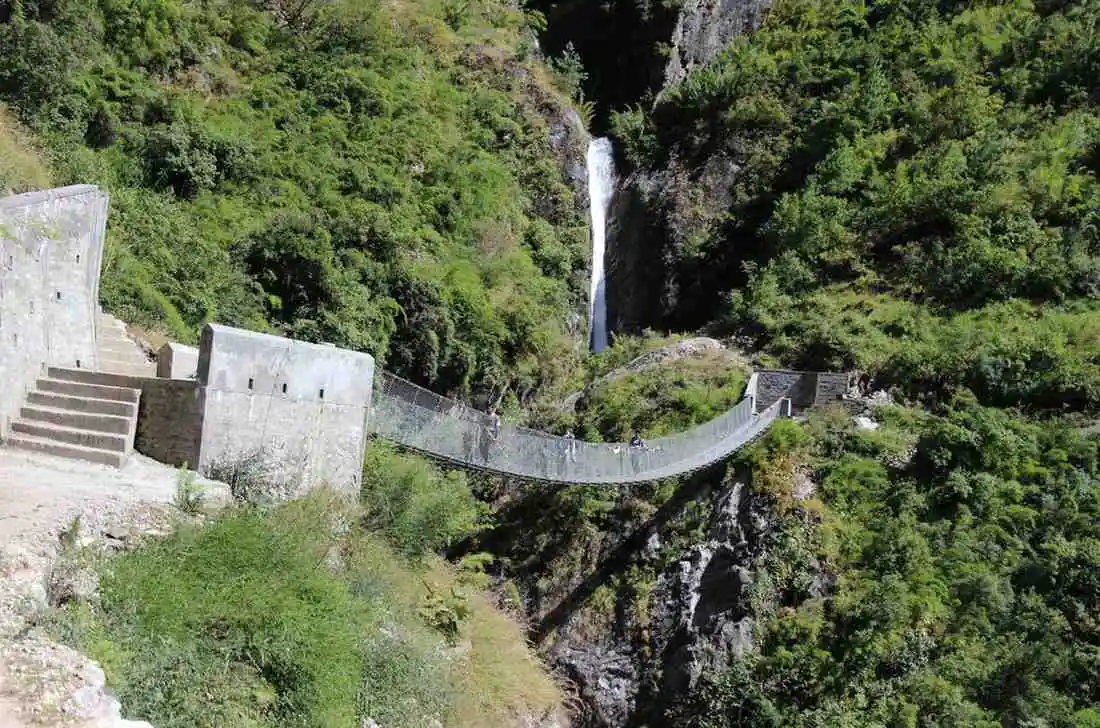
After breakfast, you lace up your boots and set off from Machhakhola on foot. The trail wastes no time showing you what this trek is all about: narrow paths carved into hillsides, rivers crashing below suspension bridges, and the kind of raw, unfiltered scenery that makes you forget about everything back home. The route threads through Tharo Khola and Khola Besi before rewarding you with a soak or at least a look at the Tatopani hot springs. From there, you cross the Budhi Gandaki on a swaying suspension bridge, tackle some stony staircases, pass through landslide-scarred terrain, and push through to Doban and then Thado Bharyang. The west bank of the Budhi Gandaki opens up as you climb a ridge and follow the river upstream into the village of Jagat (1,350 m), where a warm teahouse meal and a bed are waiting for you.
Breakfast done, you say goodbye to Jagat and head deeper into the gorge. This section of trail is a proper adventure, with steep drops, narrow passages, and the constant roar of the Budhi Gandaki keeping you company. The path swings across the east bank of the river and dips through forests thick with bamboo, which have a way of making the whole world feel quieter and greener. Eventually you reach Deng Khola, and just beyond it, the small and wonderfully unhurried village of Deng (2,130 m). It's a simple place, but after a day of solid trekking, the teahouse here will feel like exactly what you need. Dinner, conversation with fellow trekkers, and then sleep.
The trail from Deng starts to reveal the Himalayan character that defines the upper reaches of this route. You cross the Budhi Gandaki and climb toward Rana, where the valley opens up and the views start to reward the effort. The path continues along the western flank of the Budhi Gandaki valley, passing mani stone walls and Buddhist monuments that remind you this is as much a spiritual landscape as a physical one. Through the village of Ghap, on to Prok, where Siring Himal makes its first proper appearance on the horizon, and across rivers and through bamboo forests before the trail finally flattens out and climbs into Namrung at an 2,630 m. Settle in for the night with views of Ganesh Himal, Siring, and Mt. Himal Chuli catching the last light of the day. Moments like this are why you came.
Today's trail pushes uphill through forested ground, and the elevation gain is real, but so are the rewards. You pass through Lihi, a pretty village surrounded by chortens and barley terraces that seem to have been placed there purely to be photographed. The trail continues across the Simnang valley and through Sho before delivering you into Lho. It's worth stepping outside the teahouse in the evening if the skies are clear. Lho at an altitude of 3,180 m sits with one of the most dramatic Manaslu backdrops of the entire trek, and standing there with a cup of tea while that mountain fills your field of vision is one of those quiet, unforgettable moments.
The walk from Lho begins with an easy stride to Shyala village before the trail winds its way to Sama, and this is where Manaslu truly commands your attention. The mountain fills the sky ahead of you, massive and close, draped in glaciers that glint in the light. At Sama, the Ribung Gompa is worth a visit; the monks here have been keeping watch over this valley for generations. From Sama, it's a short push into Samagaon (3,500 m), the last significant village before the high passes. Take the afternoon to settle in, explore the village lanes, and breathe in the mountain air. Samagaon has a distinct Tibetan flavor in the architecture, the faces, and the prayer flags snapping in the wind, and it's a genuinely special place to spend a night or two.
Rest days on high-altitude treks rarely feel like rest, and this one is no exception, in the best possible way. Your body needs time to adjust to the elevation, and Samagaon gives you the perfect reason to wander rather than push. The hike up to Pungyen Gompa is the natural choice for the morning. It's a solid climb, but the monastery perched above the valley is extraordinary, and the views of the surrounding glaciers from up there justify every step. Come afternoon, take it easy, explore the village, chat with locals, or simply sit and watch Manaslu change color as the sun moves across the sky. A slower day today means a stronger body tomorrow.
Leaving Samagaon, the trail follows the Budhi Gandaki upstream, crossing it a couple of times on suspension bridges as the valley narrows. The path toward Larkya La begins to show its character here; mani walls line the route, juniper trees give way to rockier ground, and the air carries that particular crispness that only exists above 3,500 meters. A stone arch along the way frames a sweeping Himalayan panorama that stops most trekkers in their tracks. After that, it's a steady walk into Samdo at an altitude of 3,860 m is a small village close to the Tibetan border. The energy here is different, quieter, and more remote, and there's a sense that you're genuinely far from the everyday world. Settle in early and rest well; the hardest and most spectacular days are just ahead.
Today's stage is all about getting into position for the big day. The trail crosses wooden bridges over the Budhi Gandaki multiple times and works steadily upward, crossing several water streams as you gain altitude. The Larkya glacier comes into view along the way, a slow-moving river of ice that makes the scale of this landscape click into perspective. Dharamsala which is at the altitude of 4,480 meters (also called Larkya Phedi) is basic, with teahouses perched at the foot of the pass with no-frills accommodation, but everyone here is in the same boat: eating well, sleeping early, and mentally preparing for tomorrow's crossing. It's a good kind of anticipation. Go to bed early.
This is the day the whole trek has been building toward. You'll set out before sunrise, headlamps on, breath visible in the cold air, and start the long climb toward Larkya La. The trail moves through moraines and alongside the glacier before the final steep push to the pass at 5,106 meters. When you get there and turn around, the view is one of those that stops you completely: Annapurna, Himlung, Kangguru, Cheo Himal, and the great bulk of Manaslu itself, all spread out in front of you. It's worth every step of the climb. The descent to Bimtang (5,106 m) is long, and your legs will know it by the end, but the lower you drop, the warmer and greener the world becomes. Rhododendron forests, open pastures, and finally the sweet relief of arriving at Bimtang with Manaslu still watching over you from the north. Tonight, the beers are well earned.
The final trekking day eases you back toward the lower world. High pastures give way to forested trails as you descend, crossing the Dudh Khola on a suspension bridge and winding through rhododendron stands that, in season, are ablaze with color. You pass through Gho, climb to Tiliche, and then push on through Thonje, prayer flags and mani walls marking your passage at the village entrance, before arriving at the police checkpoint at Dharapani. Dharapani sits at the junction of the Manaslu and Annapurna Circuit trails, and there's something poetic about finishing on a path that other trekkers have just begun. After checking permits, it's a short walk to the roaring waterfall at Tal, and then the final stretch into Dharapani proper. From here, a jeep whisks you along the Marsyangdi Khola valley, through broadening landscapes and river-hugging roads, down to Besisahar for a final night in a comfortable teahouse.
The last morning on the road. The drive back to Kathmandu follows the Marsyangdi and Trishuli rivers through a landscape of rice paddies, cascading waterfalls, terraced hills, and roadside villages that blur pleasantly past the window. It's a good journey for reflection; three weeks ago you were sitting in a Kathmandu hotel, and now you're returning with 5,000-meter passes, glacier views, and remote Himalayan villages tucked into your memory. By the time the city traffic closes in around you, you'll have earned every bit of the rest that follows.
Because your next adventure is impatiently waiting for you.
Last Minute Note: Grab incredible deals on the last minute departure / Book spontaneous trips to hip destinations with limited-time offers and discounted price
Before you think of or actually plan any adventurous or relaxing tours, travels, or treks with Nepal Outdoor Expeditions.