
The Ghorepani Poon Hill Trek is one of the most rewarding short treks in the Annapurna region. It offers sweeping Himalayan views along a clean, beginner-friendly trail. Over a few days, the route climbs through rhododendron and oak forests and passes traditional Gurung and Magar villages before reaching the famous Poon Hill viewpoint (3,210m). From up there, trekkers get panoramic views of Annapurna South, Dhaulagiri, Machhapuchhre, and Nilgiri. The trek needs no technical climbing skills and involves only limited exposure to high altitude. The Ghorepani Poon Hill Trek takes fewer days than the Annapurna Base Camp or the Everest Base Camp trek. That makes it a great choice for travellers with limited vacation time, families with children, and first-time trekkers in Nepal. The trek starts and ends near Pokhara, with comfortable tea house stays along the way. It works well either as a standalone trek or as a warm-up for longer Annapurna and Everest adventures.
 Duration
4 Days
Duration
4 Days
 Difficulty
Moderate
Difficulty
Moderate
 Max. Altitude
3210 meters
Max. Altitude
3210 meters
 Prime Activity
Trekking In Nepal
Prime Activity
Trekking In Nepal
 Season
(March-May) (September-November)
Season
(March-May) (September-November)
 Group Size
1-12 people
Group Size
1-12 people
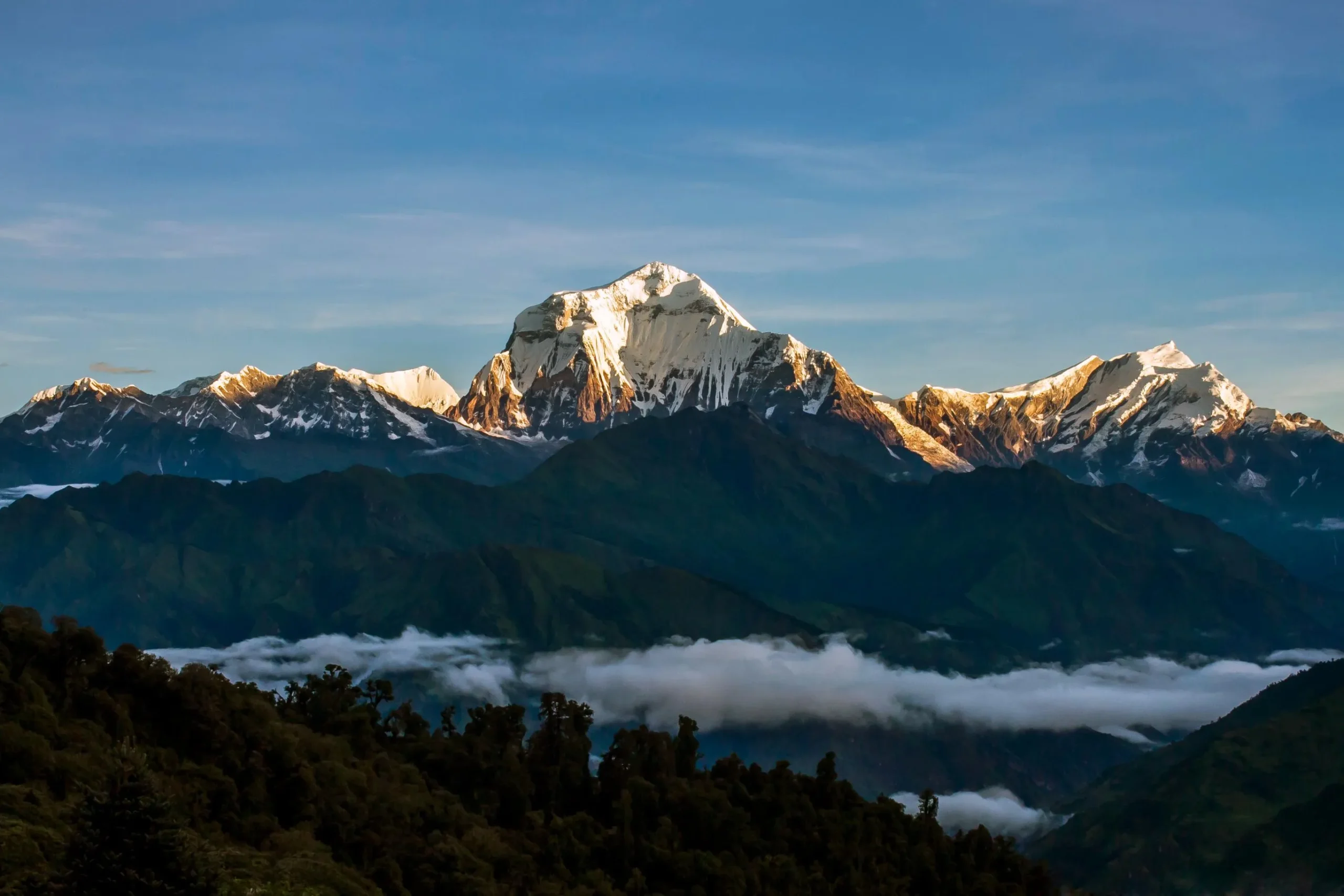


The weather varies by season in the Annapurna region, which shapes the trekking experience. During spring (March to May), temperatures are moderate, skies are clear, and vibrant rhododendron blooms add color to the landscape. Autumn (September to November) is the most popular season for trekking, with stable weather and excellent visibility, and comfortable daytime temperatures compared to colder nights.
During winter (December to February), the region gets cold, especially at higher altitudes, and snow may cover some trails, making trekking more challenging. Monsoon season (June to August) brings heavy rainfall that can make trails slippery, but it also turns the region lush and green, offering a different kind of scenery.
Culturally, this trek takes you through remote villages inhabited by Gurung and Magar communities. If you trek in autumn, you may catch festivals such as Dashain, Tihar, and Lhosar being celebrated with locals. You’ll find cozy lodges and tea houses serving dishes like dal bhat and the region’s famous yak cheese.
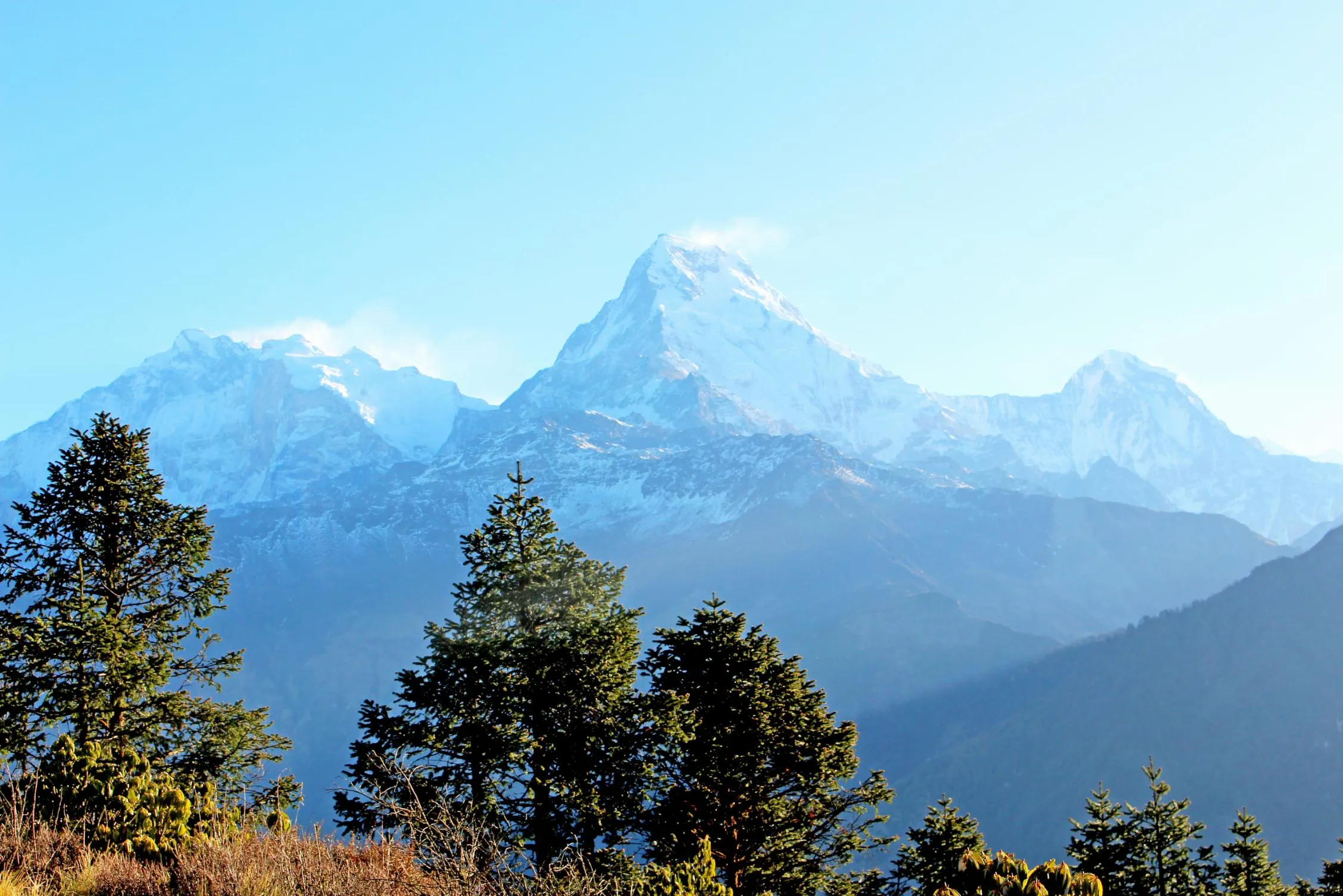
From a natural perspective, the main draw is the Poon Hill viewpoint (3,210m), where you can watch spectacular sunrises over the Annapurna and Dhaulagiri ranges. The rhododendron forests, especially vivid in spring, add extra beauty to the trek. You may also spot wildlife such as langurs, mountain goats, and Himalayan monals.
Hiking days involve 4 to 6 hours of walking, much of it on stone staircases and forest trails. The climb out of Ulleri is the steepest section of the whole trek, a long, non-stop set of stone steps that catches many first-timers off guard. Trail conditions are generally well maintained, but uneven steps and muddy patches (especially after rain) call for careful footing.
At 3,210m, Poon Hill is the highest point on the trek. This is well below the altitude where serious AMS risk usually begins, so acclimatisation days aren’t required. Mild symptoms like shortness of breath or light-headedness are possible but uncommon, and they usually improve quickly with rest and hydration.
Most hiking days run 4 to 6 hours, broken up with rest stops and meal breaks. The pace is generally relaxed compared to higher-altitude treks, with plenty of time built in to enjoy the scenery instead of rushing between stops.
This trek suits most people with a reasonable level of fitness and no major health issues. Beginners with some hiking or stair-climbing experience handle it well, and it’s a realistic option for families with children and older trekkers too, as long as they’re comfortable with a few hours of walking and some elevation gain.
The ecosystem of the Annapurna region has been significantly affected by rising tourism. Trekkers have a responsibility to help preserve the beauty of the Himalayas for future generations. Here are some ways to travel more responsibly:
The Ghorepani Poon Hill Trek offers an outstanding range of peaks, best seen from a few key points along the route.
Modern trekkers want a balance of adventure and connectivity. Here’s how we try to meet that:
At 3,210m, the Ghorepani Poon Hill Trek carries a low risk of Acute Mountain Sickness (AMS) compared to higher Himalayan routes. Most people can reach this elevation without any issue, though it’s still worth knowing the basics before you go.
Mild AMS symptoms include headache, nausea, dizziness, and fatigue. These are uncommon at this altitude, but can happen, especially if you push the pace or skip hydration. Symptoms usually resolve quickly with rest, fluids, and a slower pace.
Hydration plays a bigger role in comfort and energy levels than most trekkers realize. Drinking water throughout the day, rather than only when you feel thirsty, helps reduce fatigue and lowers the chance of altitude-related discomfort.
Guide monitoring is part of every trek. Experienced guides keep an eye on group members for early signs of AMS or general fatigue, and they’re trained to adjust the pace or itinerary if needed.
In the unlikely event of a medical emergency, response is straightforward given the trek’s proximity to Pokhara. The nearest medical help is in Pokhara, usually a few hours away by road depending on where you are on the trail, and evacuation options are more accessible here than on higher, more remote treks.
Overall, this is one of the lower-risk treks in the Annapurna region from a health and safety standpoint, which is part of why it suits such a wide range of trekkers.
Staying connected on the Ghorepani Poon Hill Trek is easier than on most higher-altitude routes, though the service isn’t as reliable as in the cities.
Two permits are required to trek the Ghorepani Poon Hill route, both needed for trekking in the Annapurna area.
Both are arranged in Kathmandu or Pokhara before the trek starts and are included as part of our standard package, so you won’t need to deal with the paperwork yourself. You’ll just need a few passport photos and your passport details in advance.
Meals are included during the trek and served at the tea houses you stay in each night, with a good variety available along the path.
Tibetan bread, eggs (boiled, fried, or omelette), pancakes, porridge, and tea or coffee are common ways to start the day.
Dal bhat (the Nepali staple of rice, lentils, and greens) is widely available, along with fried rice, noodles, momos, and pasta. Dal bhat is often the best choice on trekking days since most tea houses offer free refills, which helps keep your energy up on the trail.
Dal bhat again, along with soup, curry dishes, and sometimes pizza at larger tea houses. Local specialties also show up on some menus, depending on the village.
Vegetarian options are available throughout the trek, and most tea houses can accommodate vegan requests too, though choices get slimmer the further you go. It’s worth flagging any dietary needs with your guide at the start of the trek so meals can be planned around them.
Getting to and from the trek involves a mix of road travel, all included as part of the standard itinerary.
Private vehicles offer more flexibility and comfort, especially for families or smaller groups, while tourist buses are a budget-friendly shared option. Road conditions on the Pokhara to Ulleri stretch can be rougher than the highway, so a sturdier vehicle is usually used for that leg.
The Ghorepani Poon Hill Trek works well for a wide range of travelers, which is part of why it’s one of the most popular short treks in Nepal.
First-time trekkers will find it a great introduction to multi-day hiking, with enough challenge to feel like a real achievement without the risks of high-altitude routes. Couples often choose this trek for a scenic, low-stress getaway that doesn’t require much hiking experience. Families with children can manage the trail at a comfortable pace, and tea house accommodation makes overnight logistics easy.
Solo travelers will find it easy to join a group or arrange a guide, with plenty of other trekkers along the path. Senior trekkers in reasonably good health often choose this trek specifically because of its lower altitude and shorter duration. Photographers are drawn to the sunrise panorama at Poon Hill and the rhododendron forests in spring, each a strong reason on its own to make the trip.
Finally, anyone with just 4 to 5 days to spend in Nepal will find this is one of the few treks that delivers a genuine Himalayan experience in that timeframe.
While the Ghorepani Poon Hill Trek suits most travelers, it isn’t the right match for everyone.
Trekkers looking for a true high-altitude adventure, with thinner air, glacier crossings, or extended time above 4,000m, will find this trek too short and too low to meet that goal. The same goes for those hoping to cross snow-covered mountain passes; this route stays well below the snowline for most of the year.
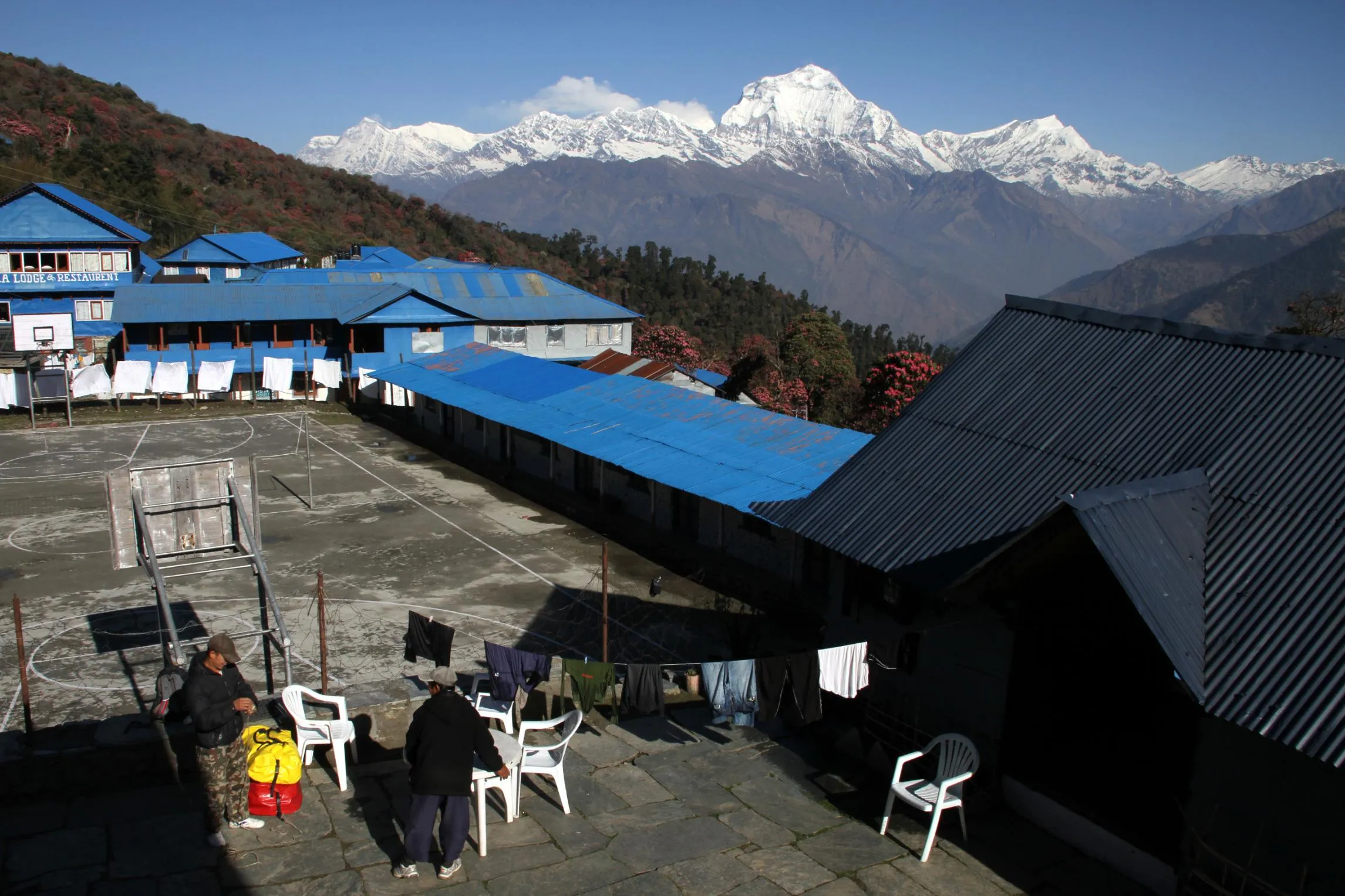
Accommodation along the Ghorepani Poon Hill Trek is in tea houses, simple, family-run lodges that have served trekkers in the Annapurna area for decades. Rooms are usually twin-sharing with basic furnishings: a mattress, blanket, and small desk. Bathrooms are usually shared, though some tea houses in Ghorepani offer attached or private options.
Hot showers are generally available, sometimes solar-heated and sometimes gas-heated for a small extra fee. Charging facilities for phones and cameras are also available at most tea houses, often for a small fee depending on the device. WiFi is becoming more common along this route too, though speed and reliability can vary, especially at higher elevations like Ghorepani.
Blankets are provided, but nights can get cold, particularly in Ghorepani and at higher points along the trail, so packing a warm layer or a lightweight sleeping bag liner is a good idea.
Overall, comfort levels are reasonable for a trekking route: clean enough, warm enough, and reliably better than camping, but not on par with a hotel. Trekkers should expect simple but comfortable rooms rather than anything luxurious.

Tenzing Sherpa
Have questions? Our travel specialists are here to help plan your perfect adventure.
Chat on WhatsAppKathmandu: 1,400m / 4,593 ft Pokhara: 822m / 2,697 ft Elevation Change: -578m / -1,896 ft Meals: Breakfast Accommodation: Hotel The adventure starts with a scenic overland journey from Kathmandu to Pokhara, which takes approximately 6 to 7 hours depending on traffic and stops. The road winds through green hills, past river valleys, and along terraced farmland that hints at rural Nepali life. There's a stop along the way for lunch, and masses of chances to stop and take photos because the landscape shifts from the busy streets of Kathmandu to the quieter, greener landscapes as you approach Pokhara. Once you arrive in Pokhara, you will check into your lodge and have the rest of the night at leisure. Pokhara has a much slower pace than Kathmandu and is known for its beautiful lakes and views of the Annapurna range on clear days. Most people spend the night on foot along Phewa Lake or wander through Lakeside, which is full of cafes, restaurants, and local shops where you can loosen up after the power.
Ulleri: 2,050m / 6,726 ft Ghorepani: 2,840m / 9,318 ft Elevation Gain: 790m / 2,592 ft Meals: Breakfast, Lunch, Dinner Accommodation: Teahouse / Lodge After breakfast, you will drive for around 4 hours from Pokhara to Ulleri, passing via small villages like Birethanti and Tikhedhunga along the way. The street follows the river for an amazing stretch before climbing into the hills, and you'll get your first real glimpse of the trekking trail beforehand because the villages end up smaller and more spread out. From Ulleri, the trek begins with a consistent uphill climb through a thick rhododendron forest, and it takes approximately 4 hours to reach Ghorepani. Ghorepani sits high up in the hills and is one of the best spots in this direction for mountain perspectives. As you settle into your teahouse for the night, you may get early glimpses of the Dhaulagiri and Annapurna peaks, especially if the skies are clear during the evening. It's a good idea to relax well here, because the next morning starts early with a climb to Poon Hill before dawn.
Ghorepani: 2,840m / 9,318 ft Poon Hill: 3,210m / 10,531 ft Elevation Gain: 370m / 1,213 ft Meals: Breakfast, Lunch, Dinner Accommodation: Hotel The day starts early, well before dawn, with a hike as far as Poon Hill. The climb is brief, however steep, and most trekkers time it so they reach the pinnacle just as the sun comes up over the mountains. Once you're back at Ghorepani, you'll have breakfast and then start the trek in reverse to Ulleri, retracing the same trail through the rhododendron forest. From Ulleri, a car could be waiting to take you back to Pokhara. Poon Hill is well-known for its sunrise views, and on a clear morning, you can see a wide stretch of the Annapurna and Dhaulagiri ranges lit up in golden light. It's one of the most rewarding moments of the complete trip, in particular after the climb the day before. Once you are back in Pokhara for the night, you will have a few hours of free time to loosen up by the lake or take another stroll around Lakeside before returning to Kathmandu the following day.
Pokhara: 822m / 2,697 ft Kathmandu: 1,400m / 4,593 ft Elevation Gain: 578m / 1,896 ft Meals: Breakfast Accommodation: Hotel After breakfast, you may begin the drive back to Kathmandu, following the same route via the hills and river valleys that you passed on the way out. It's a great opportunity to take in the scenery one more time, or just loosen up after a few days of trekking. The drive takes about 6 to 7 hours, with a stop along the way for lunch. Once you return to Kathmandu, you will check into your lodge with the rest of the day free. Many visitors use this time to explore Thamel, which is the principal tourist region within the city, full of stores, restaurants, and streets that are worth exploring after some quiet days inside the hills. It's a relaxed way to give up the experience before heading home the next day. Guide's Insight: Treat this as a buffer day, no longer only a transit day. Road situations can, from time to time, cause delays, so it's exceptional not to book onward flights for the same night.
See what past travelers are saying about their experience with Nepal Outdoor Expeditions.
Because your next adventure is impatiently waiting for you.
Last Minute Note: Grab incredible deals on the last minute departure / Book spontaneous trips to hip destinations with limited-time offers and discounted price
Before you think of or actually plan any adventurous or relaxing tours, travels, or treks with Nepal Outdoor Expeditions.
Ghorepani Poonhill Trek