
Experience an adventure that is more than just the ordinary, where a blend of the two most valued treasures of the Himalayas is put into one memorable trip. The Everest Base Camp Trek through Gokyo Lakes is not only a walk to the base of the tallest peak in the world; it is a complete experience of the heart and soul of the Khumbu region. The path offers a more diverse and adventurous experience compared to the traditional EBC trail and takes you off-route to explore the serene and turquoise waters of the Gokyo Lakes. It is an expedition meant for people who want to explore the splendor of the Himalayas to its fullest, offering seclusion, breathtaking views, and a deep feeling of achievement. This special itinerary is designed to feature the entire beauty of the Everest region. You will witness spectacular views of 8,000-meter mountains such as Everest, Lhotse, Makalu, and Cho Oyu from several incredible viewpoints. In addition to the usual vantage points, this trip takes you across the tricky Cho La Pass, a high-altitude crossover that links the Gokyo and Khumbu valleys. This adventurous element adds a sense of difficulty and satisfaction to finally reaching Everest Base Camp, making the achievement more well-deserved. The combination of natural marvels, with tranquil lakes and gigantic glaciers, along with the cultural experience of traditional Sherpa villages, makes the Himalayan journey a holistic one. By taking this combined route, you follow a more complete and less-used path to your destination. Traveling via the Gokyo Valley allows better acclimatization, thereby increasing the chances of a successful and safe arrival. You will cross primeval moraines, hear the groaning of the massive Ngozumpa Glacier, and gaze in amazement at the sacred lakes glittering under the Himalayan sun. This is not just a physical journey but a pilgrimage to the high mountains.
 Duration
13 Days
Duration
13 Days
 Difficulty
Moderate
Difficulty
Moderate
 Max. Altitude
5,545 m
Max. Altitude
5,545 m
 Prime Activity
Trekking In Nepal
Prime Activity
Trekking In Nepal
 Season
(March-May) (September-November)
Season
(March-May) (September-November)
 Group Size
1-12 people
Group Size
1-12 people


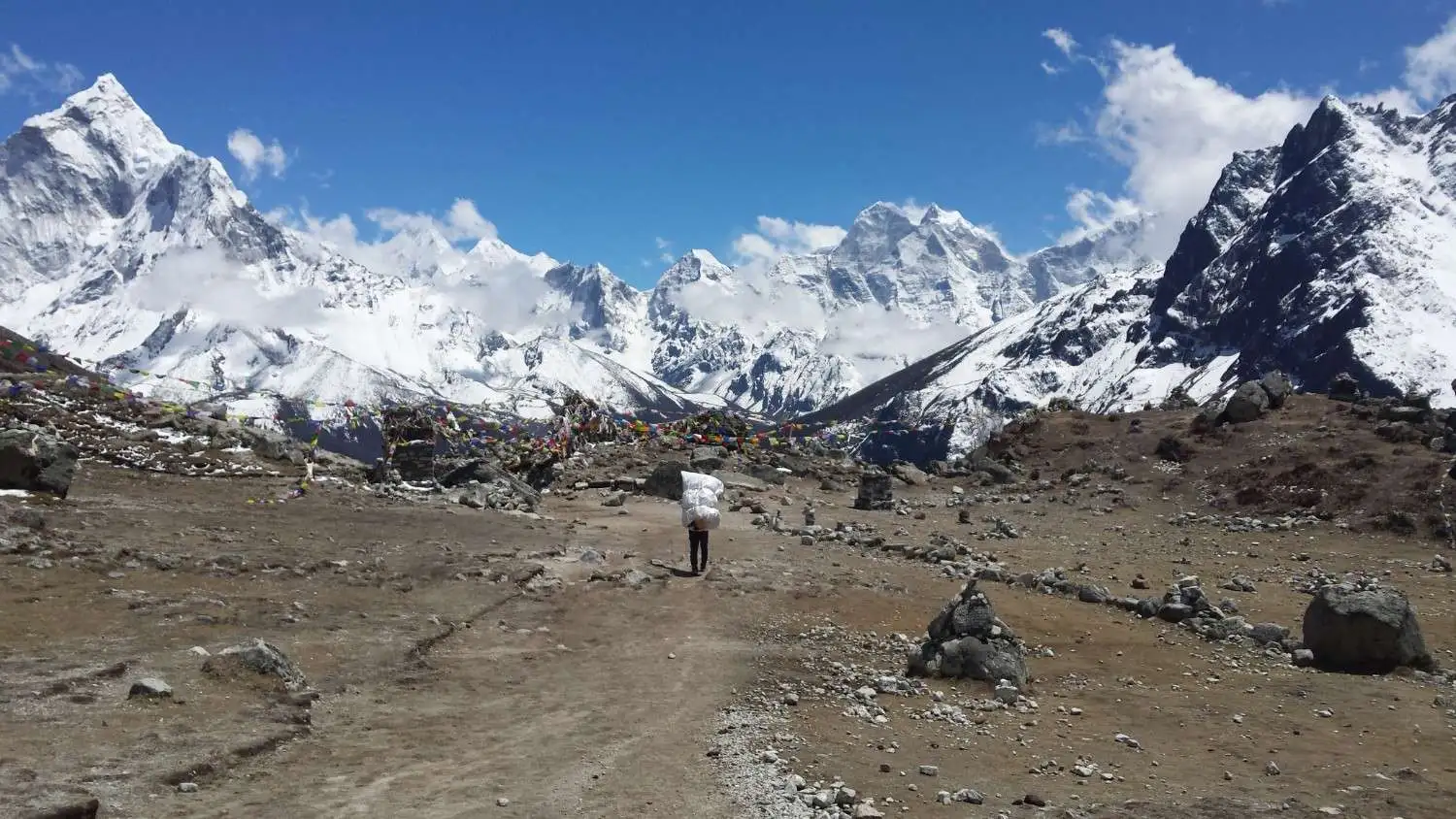

The journey begins with an exciting flight from Kathmandu to Lukla, where you are immediately welcomed by the trail. The early stages of the trek serve as a warm-up in the Khumbu region, with the Dudh Koshi River flowing through scenic villages such as Phakding and Monjo. A steep yet rewarding ascent takes you to Namche Bazaar, the bustling capital of the Sherpa homeland. Here, you spend valuable time acclimatizing, exploring the lively market, and enjoying the first breathtaking views of Everest and the surrounding peaks.
From Namche, the trail detours west toward the Gokyo Valley, following a less-frequented route to Everest Base Camp. The path passes through rhododendron and birch forests, steadily gaining altitude as you walk through villages such as Dole and Machhermo.
The highlight of this section is reaching the Gokyo Lakes. After trekking alongside the massive Ngozumpa Glacier, the sight of the first sacred lake is truly enchanting. You stay in the small village of Gokyo, located on the shore of the third and largest lake. A pre-dawn ascent of Gokyo Ri follows, offering one of the most spectacular mountain views on earth, with Everest, Lhotse, Makalu, and Cho Oyu rising side by side in the morning sunlight.
The adventure continues with the challenging crossing of the Cho La Pass. This demanding day involves walking over rocks, snow, and ice, but the sense of accomplishment and stunning alpine scenery make it a memorable experience.
After descending the pass, the trail rejoins the classic Everest Base Camp route at Lobuche. As you move closer to your goal, the landscape becomes harsher and more glacial, following the lateral moraine of the Khumbu Glacier toward Gorak Shep, the last settlement before base camp. From here, you take the iconic walk to Everest Base Camp itself, standing beneath the towering Khumbu Icefall.
The following morning, a climb to Kala Patthar rewards you with the most famous close-up view of Mount Everest as it catches the first rays of sunlight. The trek concludes with a gradual descent back through the Khumbu Valley, retracing your steps to Lukla before flying back to Kathmandu, carrying unforgettable Himalayan memories.
Hiking in the Everest area, and especially on trails such as Gokyo Lakes and Everest Base Camp, involves rugged terrain at high altitude, adverse weather, and physically challenging conditions. Owing to this, comprehensive travel insurance is necessary and an obligatory requirement for all trekkers. Adequate insurance not only provides financial security but also peace of mind, so trekkers are not worried about emergencies or unexpected costs during the trek.
An appropriate travel policy for the Everest Base Camp and Gokyo Lakes trek should provide coverage in several areas:
It is important for trekkers to carry proof of insurance during the trek. Guides may review policies before starting, and trekking agencies may not allow participation without valid insurance. Trekkers should keep both a digital copy on their phone and a printed copy as a backup in case of emergencies.
Before traveling, trekkers should also check emergency contact numbers, claims procedures, and coverage limits. Some insurance companies provide 24-hour emergency support, which is invaluable when trekking in remote areas like the Gokyo Lakes, where urgent medical treatment may be unavailable.
Indeed, the majority of travelers are able to obtain a visa on arrival in Nepal, which is a fairly straightforward process. Visas are issued at Tribhuvan International Airport, Kathmandu, and at several land border entry points, such as Birgunj, Bhairahawa, Kakarbhitta, Nepalgunj, Dhangadi, Mahendranagar, and Belhiya. At Kodari, travelers entering or leaving Tibet may also receive a visa, although admission may be subject to additional restrictions.
Visitors can also apply for a visa in advance at a Nepalese embassy or consulate in their home country. While this is not compulsory for most nationalities, it may save time on arrival, particularly during peak seasons.
Nepal offers several entry tourist visas that allow travelers to enter and exit the country within the visa’s validity period. The charges are consistent whether the visa is obtained on arrival or at an embassy.
The current visa prices are as follows:
Payments can be made in foreign currency or by card, depending on the facilities at the entry point. Passports must be valid for at least six months after arrival.
Visa extensions are possible at the Department of Immigration offices in Kathmandu or Pokhara. Extensions may be needed if travelers want to extend their stay due to longer trekking trips, illness, or changes in itinerary. The extension process is generally straightforward but requires proper documentation and payment of an additional fee based on the extension period.
For the most accurate and current information, tourists are advised to visit the official Nepal Immigration website or contact the immigration offices directly.
If you are interested in a similar adventure in Nepal:
Safe and comfortable accommodation is a critical aspect of the Everest Base Camp Trek with Gokyo Lakes. Tea houses are the primary form of lodging and are local lodges operated by Sherpa families in the villages along the trekking route. These lodges have been specially built to suit high-altitude trekkers, providing basic comfort, warmth, and a friendly ambiance.
Spending the night in tea houses not only guarantees rest and recovery after long days of trekking but also provides an opportunity to experience Sherpa culture and the everyday life of the Khumbu region. The trip is therefore enriching not only physically but also culturally.
The Everest Base Camp and Gokyo Lakes route features tea houses that provide convenient and comfortable accommodation. While they are not as luxurious as hotels in Kathmandu or Pokhara, they offer safe, clean, and dependable lodging at every point along the trail.
These lodges in the higher altitudes of Everest are constructed to withstand extreme high-altitude conditions, including cold weather, high winds, and minimal snowfall. They also serve as community centers where trekkers can meet locals and other travelers, making the trekking process social, culturally engaging, and enjoyable.
Most tea houses offer twin or triple rooms with basic beds, including mattresses, blankets, and sometimes pillows. Rooms at higher altitudes, particularly in the Gokyo Lakes, Dzongla, or above 4,000 meters, are smaller and simpler due to the logistical challenges of transporting supplies. It is strongly recommended that trekkers bring a high-quality sleeping bag to stay warm during cold nights.
Rooms are often shared, allowing guests to socialize while considering the flexibility and needs of other trekkers. Bedding is generally clean, though arrangements prioritize warmth and practicality over luxury or style.
Tea houses usually have common areas heated by wood-burning stoves or gas heaters, which warm the dining and sitting areas. Individual rooms can be cold, especially in late evenings and early mornings.
Dining rooms serve as social hubs where trekkers can enjoy hot meals, tea, and coffee while sharing experiences from the trail. Food is cooked daily, often using local produce, and the cozy dining areas provide a comfortable environment for relaxation after a long day of trekking in cold, high-altitude conditions.
Bathrooms in tea houses are generally simple and shared among guests. Toilets may be Western-style or squat toilets, and water for showers is usually heated at specific times of the day. Cleanliness has improved significantly in recent years, but trekkers should still be prepared for limited hot water and basic hygiene facilities, especially in remote locations such as Gokyo or Dzongla.
Carrying personal toiletries and hand sanitizer is recommended. Understanding the limitations of high-altitude accommodations helps manage expectations and makes the trekking experience more comfortable.
The higher you go along the Gokyo Lakes and Everest Base Camp trail, the simpler the teahouse accommodations become due to the challenges of supply transport and infrastructure. Lodges may be smaller, temperatures lower, and amenities fewer, but they still provide essential shelter, warmth, and access to food and water.
Trekkers are advised to lower expectations of luxury, focusing instead on rest, safety, and proper acclimatization. Staying in tea houses also provides an excellent opportunity to learn more about Sherpa culture, meet new people, and enjoy a safe and comfortable environment amidst the stunning views of Everest and the Gokyo area.
Proper nutrition is essential during the Everest Base Camp Trek with Gokyo Lakes, as the trek involves high-altitude climbs, long days, and physically demanding trails throughout the Khumbu region. Tea houses along the route not only provide meals but also offer social spaces for trekkers to rest, acclimatize, and interact with Sherpa families.
Meals are carefully planned to provide energy, warmth, and hydration while reflecting local food traditions. Trekking at high altitudes involves exposure to cold weather, extensive physical activity, and reduced appetite, so food is designed to meet both nutritional and cultural needs.
Breakfast in teahouses along the Gokyo Lakes and Everest Base Camp trek is high in calories and easily digestible to prepare trekkers for long, strenuous days. Typical options include porridge, eggs, toast, pancakes, and local breads, served with hot tea, coffee, or chocolate. Lunch and dinner are more substantial, often including rice with lentil soup (dal bhat), noodle soups, fried rice, and vegetable stir-fries to provide carbohydrates for energy, protein for muscle repair, and fats to keep the body warm.
At higher altitudes, such as Gokyo Ri or Dudh Pokhari, meals may include local soups, stews, and energy snacks to maintain stamina during steep climbs and acclimatization days.
Tea houses along this route prepare both traditional Sherpa foods and international dishes to accommodate the preferences of global trekkers. Traditional options include momo (steamed or fried dumplings), thukpa (noodle soup), and dhindo (millet or buckwheat porridge).
Familiar international foods like pasta, pizza, and fried rice are also available, catering to trekkers who may have reduced appetites at high altitudes. Since the Gokyo Lakes route is more remote than the conventional EBC path, food options may be limited in some areas, so carrying extra items like energy bars, nuts, and dried fruits is advisable.
Trekking at high altitudes along the Gokyo Lakes and Everest Base Camp trail increases calorie needs by 30–50% due to higher exertion, colder temperatures, and reduced oxygen levels. Meals are planned to provide complex carbohydrates, proteins, and fats to supply energy, aid muscle recovery, maintain warmth, and support sustained physical activity throughout the trek.
One of the most significant steps in planning an Everest Base Camp Trek with Gokyo Lake in Nepal is preparing a proper packing list. Trekking routes in the country cover a wide range of altitudes and climates, from lowland valleys (warm) to high mountain passes (cold).
The weather changes rapidly, and amenities become limited as you rise in altitude. Hence, trekkers must pack the appropriate combination of clothing, technical equipment, and personal necessities.
Everest Base Camp Trek with Gokyo Lake clothing should follow the layering system, allowing trekkers to adapt easily to varying weather conditions. Rather than a single heavy outfit, multiple layers of varying weights are recommended.
Quality technical equipment ensures safety, comfort, and confidence on the trail.
Optional items enhance comfort, particularly at high altitude.
Most trekkers use porters to carry heavy luggage.
Packing cubes help with organization. Wheeled suitcases are not recommended. A small padlock adds security. Tipping porters is customary and depends on trek length and service quality.
Thamel is the main center for renting Everest Base Camp Trek and Gokyo Lake gear. Most rental shops are located in alleys like Bhagwan Bahal, Jyatha, and Saat Ghumti, all within walking distance from central Thamel.
Popular and trustworthy shops include:
When renting, always inspect equipment for damage, broken zippers, or worn stitching. Bargaining is common (20–40% discount). A refundable deposit of around $50–200 USD (NPR 8,000) is usually required.
Hiking in the Everest area, specifically along the Gokyo Lakes and Everest Base Camp, entails significant exposure to high altitude, where oxygen levels are lower compared to sea level. Acute Mountain Sickness (AMS), or altitude sickness, is a common issue for trekkers at elevations above 3,000 meters. It is important to identify, prevent, and manage altitude sickness to ensure that the trek is safe and enjoyable.
Altitude sickness occurs when the body struggles to adapt to the limited oxygen supply at high altitude. Mild AMS symptoms include: headaches, nausea, dizziness, fatigue, shortness of breath, loss of appetite, and sleeplessness.
If not addressed, it can develop into more severe conditions, including:
Both are life-threatening and require immediate descent and treatment.
Several factors increase the risk of altitude sickness:
Even experienced trekkers can develop AMS if they ascend too quickly, ignore symptoms, or do not rest properly.
Gradual acclimatization is the most effective way to prevent altitude sickness. Trekkers are advised to follow the rule of “climb high, sleep low”, ascending during the day and returning to lower villages at night.
Additional tips include:
Early signs of AMS should be monitored closely. Warning symptoms include: constant headaches, nausea, dizziness, and fatigue. Guides play an important role in helping trekkers identify symptoms and make safe decisions. Mild symptoms should never be ignored, as they can escalate into serious cases. The best response is rest, gradual ascent, or descent.
Tea houses and trekking agencies usually have basic oxygen and first aid available. In remote high camps like Gokyo Ri, Dzongla, or Kala Patthar, helicopter evacuation may be necessary in emergencies.
Constant contact with guides, daily monitoring of symptoms, and following safety measures are essential to prevent altitude sickness and ensure the trek remains safe and enjoyable.

Tenzing Sherpa
Have questions? Our travel specialists are here to help plan your perfect adventure.
Chat on WhatsAppThe moment the small Twin Otter plane lifts off from Kathmandu, you'll know this trip is unlike anything you've done before. The flight itself is something people talk about for years, with ridgelines passing almost close enough to touch, forested valleys dropping away beneath you, and then suddenly, those first white peaks cutting through the horizon. Thirty-five minutes feels both too short and just right. Landing at Lukla, there's always a certain electric energy in the air, with trekkers coming and going, porters loading up, and the smell of mountain pine already creeping in. Once you've met the rest of the crew and sorted your gear, the trail begins its gentle descent toward Phakding, hugging the banks of the Dudh Koshi River. You'll pass through Chaurikharka Village, where locals go about their day completely unfazed by the parade of wide-eyed trekkers. A relaxed, easy afternoon, just the way a great adventure should begin.
Today is when the Khumbu starts to show its character. The trail winds north along the Dudh Koshi, and you'll cross more suspension bridges than you can count, the kind that sway just enough to keep you honest. The Hillary Suspension Bridge is the one everyone stops to photograph, and rightly so; standing on it with the river thundering far below is a moment that sticks with you. After passing through Monjo and the Sagarmatha National Park checkpoint, the trail begins a long, lung-testing climb up through rhododendron and pine forest. By the time Namche Bazaar comes into view, terraced into the hillside like something out of a storybook, you'll have earned every step. And if the clouds cooperate, your first glimpse of Everest's summit will be waiting for you somewhere along this final stretch. Few things compare to that first sighting.
Don't let the word "acclimatization" fool you into thinking this is a rest day; it's one of the best days on the entire trek. The rule at altitude is simple: climb high, sleep low. So this morning you'll head uphill to one of the viewpoints around Namche; the Everest View Hotel, Syangboche Airstrip, or the villages of Khumjung and Khunde are all worthy options, before coming back down to spend the afternoon however you like. And there is plenty to like in Namche. It's a surprisingly lively town for sitting at 3,440 meters, with good coffee, bakeries, gear shops, and a warm buzz that makes it easy to while away an afternoon. If you happen to be here on a Saturday, don't miss the Haat Bazaar, the weekly market where locals from surrounding villages come to trade. It's colorful, chaotic, and completely wonderful.
This is where your route quietly peels away from the classic EBC trail and takes on its own personality. While most trekkers head toward Tengboche, you turn toward Dole, and the path doesn't let you forget you've made that choice. It's rocky, steep in places, and demands your full attention. The reward for that effort comes at Mong La Pass, sitting at nearly 4,000 meters. Pull up here and take a moment; the views of Khumbila, Ama Dablam, and the peaks beyond are the kind that make you go quiet. From there, the trail dips through fragrant pine and rhododendron forests, past the riverside settlement of Photse Tenga, and eventually levels out at Dole. You'll sleep well tonight.
The altitude starts to make itself known today, but so does the scenery, and the scenery wins. Thamserku, Kantega, and the enormous bulk of Cho Oyu dominate the skyline as you move through wide, open pasturelands. In summer, these meadows are vivid green and dotted with yaks grazing with complete indifference to the world. In other seasons, the landscape turns golden and bare, with a stark beauty all its own. The trail rises above the Dudh Koshi River and threads through the small, quiet settlements of Lapahrma and Luja before arriving at Machhermo. It's a small place, but it has everything you need: a warm meal, a bed, and a sky full of stars that you simply don't get at lower elevations.
Today you reach the moment you've been building toward since Lukla. The trail climbs to a ridge and then opens up into the Gokyo Valley, and the views of Cho Oyu, Thamserku, and Kantega from here are simply staggering. Beyond Pangka, the Ngozumpa Glacier comes into view, the longest glacier in Nepal, a slow-moving river of ancient ice that originates in Tibet and fills the valley floor. Walking alongside it is a humbling experience. You'll pass the first two Gokyo Lakes, Longpongo and Taboche Tsho, before reaching the main event: Gokyo Tsho, the third and most famous lake, its turquoise waters almost impossibly vivid against the surrounding rock and snow. The small village of Gokyo sits right on its banks, one of the highest permanently inhabited settlements in the country. Tonight, you'll fall asleep to the sound of wind coming off the glacier.
The alarm goes off before dawn, and every part of you will want to ignore it. Don't. The pre-sunrise climb up Gokyo-Ri is cold, steep, and breathless, and absolutely worth every bit of discomfort. At the top, four of the world's fourteen eight-thousanders line up before you: Everest, Lhotse, Cho Oyu, Makalu. Words don't quite do it justice. Most people just stand there in silence for a while, which says everything. Once you've taken it all in and the sun has fully risen, you'll make your descent and head toward Dragnak, crossing the moraines of the Ngozumpa Glacier. It's rugged terrain, loose rock, and uneven ground, but after a morning like that, you'll barely notice.
There's no sugarcoating it, Cho La Pass is the toughest day on this trek, and it's genuinely exciting because of it. The ascent takes you across glacial ice and loose rock, and it demands steady footing and a slow, deliberate pace. Your guide will be with you every step of the way, and the golden rule here is simple: don't rush. At the top, sitting at 5,420 meters, the world opens up around you, with Ama Dablam, Cholatshe, Thamserku, and a wall of peaks in every direction. It's a raw, wild place, and standing there feels like a real achievement. The descent to Dzongla is steep and requires care, but the sense of satisfaction when you finally settle in for the night is hard to match. You've crossed a Himalayan pass. Let that sink in.
This is the day. After dropping down to Chola Lake and tracing the moraine of the Khumbu Glacier, you'll pass through Lobuche and push on to Gorakshep, the last stop before the mountain herself. From here, the trail to Base Camp winds across rock and ice, the glacier groaning beside you, the scale of everything growing with every step. Base Camp itself is not what many people expect; there's no dramatic summit view, no singular landmark. What it is, is something far more powerful: you're standing at the foot of Everest, surrounded by the Khumbu. Icefall above you and the walls of Lhotse and Nuptse closing in on either side. People go quiet here too, just like on Gokyo-Ri, but for completely different reasons. Take your time. You've come a long way to be here.
Another pre-dawn start, another climb that tests your resolve, and another sunrise that makes you forget all of it instantly. Kalapatthar is where you see Everest properly, its full triangular summit rising above the ridgeline with nothing to obscure it. At 5,545 meters, with the sky turning pink and gold and the mountain lit up in alpenglow, it's one of those moments you'll carry with you for the rest of your life. Back at Gorakshep for breakfast, you'll begin the long descent toward Pheriche, passing the Thukla Memorial, a quiet and moving tribute to the mountaineers who never came home from Everest. It's a reflective end to the highest chapter of this journey and a good reminder of the mountain's true scale.
There's something deeply satisfying about descending back through the treeline. After days above it, the sight of pine and rhododendron forest feels almost luxurious. Leaving Pheriche, the trail passes through Pangboche and then climbs briefly to Tengboche, home to the most famous monastery in the Khumbu. If the monks are chanting, stop and listen; it's one of those unexpected gifts the trail sometimes offers. From Sansa, the views of Ama Dablam, Nuptse, and Thamserku are framed perfectly one last time before the trail drops beside the Dudh Koshi River and winds back into Namche. Familiar ground, but somehow it feels completely different now. You've changed since you were last here.
The last day on the trail has its own particular feeling, a mix of tiredness, quiet pride, and maybe just a little reluctance to let it end. The path back to Lukla is familiar by now: suspension bridges, the roar of the Dudh Koshi, the prayer flags snapping in the wind, and the warmth of teahouse doorways as you pass through Monjo and Jorsale. Arrive in Lukla as the afternoon light softens over the runway, find yourself a good seat at a teahouse, and raise a glass of something warm. You did it.
The same flight, the same thirty-five minutes, but it feels entirely different on the way back. You look out the window at those ridgelines and valleys, and you know them now, at least a little. The mountains that were distant and abstract two weeks ago have become something personal. Landing in Kathmandu, the warmth, the noise, and the smell of the city rush back in all at once. We'll have you back to your hotel, where a hot shower and a proper bed will feel like the greatest luxury in the world. Thank you for trekking with us, it's been a privilege sharing this journey with you.
See what past travelers are saying about their experience with Nepal Outdoor Expeditions.
Because your next adventure is impatiently waiting for you.
Last Minute Note: Grab incredible deals on the last minute departure / Book spontaneous trips to hip destinations with limited-time offers and discounted price
Before you think of or actually plan any adventurous or relaxing tours, travels, or treks with Nepal Outdoor Expeditions.
Everest Base Camp Trek Via Gokyo Lake